A field-tested framework for creators, brands, and the marketers growing channels on their behalf.
Nobody subscribes on a first date.
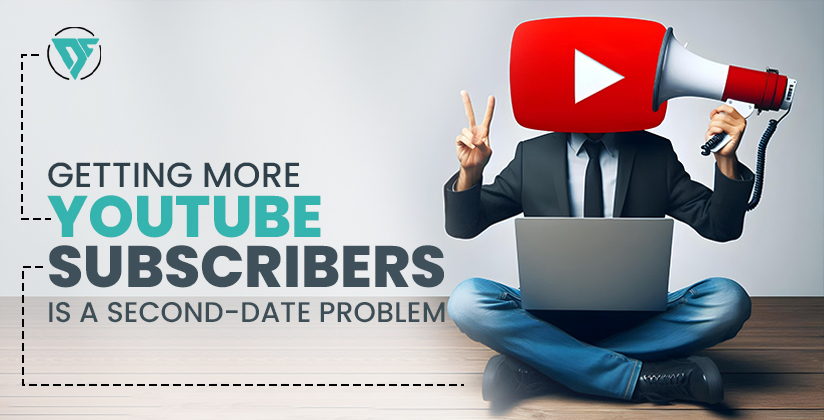
To the viewer’s mind, clicking your video is the equivalent of swiping right; they’re curious, but not invested, and one moment of boredom is all they need to hit back and never return. A subscribe is the second date, an indicator that they’ve thought about this and want to engage further. Most channels are pouring all their effort into the click and none into the second date, then wonder why their follow-through is so low.
I watched a creator prove this backwards, then forwards – she taught freelance graphic designers how to price their work, had 47 subscribers and 30 videos in, and was producing genuinely good content. Her channel’s page was using a stock banner, her thumbnails were hiding the outcome behind a headshot, and her videos all ended with “Thanks for watching,” with no further asks for a second date.
Six months later, she had just over 6000 subscribers, her camera, voice, and editing hadn’t changed in the slightest, and by the end of this piece, you’ll know what she did, in what order, because that order is the only thing nobody talks about.
The First-Date Problem

Here’s a mental model worth stealing: a viewer isn’t deciding whether your video was good, but whether they trust you for a second one. That distinction will change the way you think about where to pour your effort.
Most “grow your channel” advice online treats subscriber growth like a single lever: you publish more, and they follow. It doesn’t. Posting more without the follow-through simply means you’re getting more strangers to meet you once, and they’re never going to call for a second date.
Read the Room Before You Say Anything

Before any of the tactics below will work, your channel needs to have an answer to the unasked question each new viewer has in their head: what is this, specifically for me?
Vague channels don’t get a second date. “I make lifestyle content” tells a potential viewer nothing about video number two, but “I show software engineers how to negotiate a 20%+ raise” tells them what to expect.
Write your channel’s whole personality in one sentence: For [specific audience],
I publish [format] that delivers [outcome] every [cadence].
Make Yourself Easy to Ask Out Again
Your channel’s page is the equivalent of a stranger checking your socials after a first date. Four things decide if that check-in goes well.
A channel trailer under 90 seconds, explicitly stating who it’s for and what they get. Playlists are organized around outcomes rather than topics, because binge-watching one playlist is where most subscriptions quietly happen. A description is written around your one-sentence promise, with a subscribe link at the end. A banner, icon, and watermark that all say the same thing, so that nothing about your brand reads like it was made by three different people.
Then do the thing almost nobody does: figure out which of your videos is earning second dates. Open YouTube Studio, Analytics, Engagement, Subscribers, See more, and sort by subscribers gained rather than views. Nine times out of ten, one video quietly outperforms everything else, and sometimes it brings in as many new subscribers as a dozen others combined. That video has already proven what your audience wants, so feature it in your end screen, open a playlist with it, and possibly make it your trailer. Stop guessing when the answer is sitting in your own analytics.
The Sequel Has to Be Obvious
This is where most of your subscriber growth is actually won, one video at a time, never from a single lucky hit.
You’ve won the click, honestly – skip vague terms like “tips” or “tricks” and state the outcome. “How I Cut My AWS Bill 40% in One Afternoon” is a promise. “AWS Cost Tips” is a shrug.
Hold attention in the first 30 seconds, because retention is the strongest signal driving both recommendations and subscriptions. Skip the “hey guys welcome back” and show the payoff, then earn it.
Never let a video end without asking for the next date. One pinned comment pointing to your best next video. One end screen with one suggestion rather than five fighting for the same three seconds of attention. And a watermark that looks like a subscribe button rather than a stylized logo nobody can recognize as such. That single swap has been documented to noticeably lift subscribe rate in real tests, because people click things that look like buttons and ignore things that look like decoration.
Here’s the part worth understanding, not just following: YouTube’s recommendation system is optimizing total watch time across the whole platform, not your channel’s growth specifically. A video that holds attention gets shown to more people because that keeps them on YouTube longer. A video that doesn’t gets quietly benched. A weak thumbnail attached to a video that holds attention keeps getting handed new audiences for months, while a great thumbnail with a boring opening only gets one shot.
Shorts and long-form aren’t doing the same job, even though most channels treat them like they are. Shorts are the introduction, the loud stranger at a party who gets your attention for fifteen seconds. They reach people who’ve never heard of you and convert to subscribers at a lower rate per view because that audience is cold. Long-form is the actual date, where trust gets built and converts at a noticeably higher rate per view because the viewer already made a bigger commitment.
The move that works: Shorts introduce a stranger, and a pinned comment or end tag walks them straight into the one long-form video built to close the gap. Shorts rarely build loyalty on their own. Paired with long-form, they’re an efficient front door.
Two Kinds of Channels Get Asked Back
Two very different channel types tend to earn second dates at above-average rates, and it’s worth knowing which one you’re building, because the mechanic is identical even though the content looks nothing alike.
The narrow-tutorial channel teaches one specific, searchable skill in tight, no-fluff videos. It converts well because search intent is already high before the click; someone typing “how to fix X” is already halfway to subscribing if the video delivers cleanly.
The personality-driven channel has a recognizable host covering one consistent topic in a consistent format. It converts through familiarity and repetition; viewers come back for the person, not just the subject.
Most new channels try to be both and end up being neither. Pick one lane for your first 40 to 50 videos, and the rest of this list works twice as hard.
Stop Guessing What They Liked About You
Once you’ve published 10 to 15 videos, three reports matter more than the rest of Studio combined. Subscribers gained per video, sorted independently from views, to find your actual core content. Audience retention curves, to see exactly where a video loses people. And traffic source, Search versus Suggested, which tells you whether people find you by searching a topic or through recommendations off other videos. Whichever one is already working, lean into it harder than the one that isn’t.
Now the part almost every “grow your channel” article from a tool company conveniently skips. Two of the biggest names in this space sell exactly this kind of analysis, which is why neither will tell you what’s actually free.
| Tool | Free plan | Genuinely best for | Starting price |
|---|---|---|---|
| YouTube Studio, native | Full analytics, always free | Every creator, no exceptions | Free |
| vidIQ | Yes, limited features | Keyword and SEO scoring, competitor tracking | ~$19/mo |
| TubeBuddy | Yes, limited features | Thumbnail A/B testing, bulk editing | ~$9/mo |
Start with what’s already sitting in Studio for free. Add a paid tool once you specifically need keyword research at scale or automated thumbnail testing, not before. Buying software before reviewing the free data you already have is one of the most common, avoidable expenses in this whole game.
Stories Creators Tell Themselves

“I just need to post every single day.” The biggest jump in growth typically comes from moving off a sporadic schedule to once a week. Past that, sustainable beats aggressive.
“My watermark is basically decoration, it doesn’t really matter.” A watermark styled like an actual subscribe button converts noticeably better than a stylized logo, because people click things that look clickable.
“More calls to action means more conversions.” One clear next step beats five options competing for the same three seconds of attention, every time.
“Shorts subscribers don’t really count towards anything real.” A subscribe is a subscribe regardless of format. The difference is depth of trust, not eligibility.
“I could just buy a few thousand subscribers to get the ball rolling.” This one isn’t a gray area. Bought subscribers don’t watch, which tanks your average view duration, one of the strongest ranking signals YouTube has, and it risks your monetization eligibility entirely.
A Weekend Is Enough to Start

If you only have a weekend, spend it here.
Day one: rewrite your channel description around your one-sentence promise, fix your watermark so it reads as a subscribe button, and find your best-converting video using the analytics steps above.
Day two: rebuild the end screen and pinned comment on your five best-performing videos so they all point at that one proven video instead of scattering attention.
Day three: publish one short that’s specifically built to route new viewers into that same video, with a pinned comment carrying the link.
Small, deliberate edits to your existing catalog often move the needle faster than one more new upload made without a plan.
Ready to Fix Your Subscriber Funnel?
We’ll audit your channel and show you exactly where viewers are dropping off before they subscribe.
What the 47-to-6000 Channel Actually Did, in Order
Back to the pricing-strategy channel from the opening. The rework followed the exact sequence above, nothing more.
First, foundation: she rewrote her one-sentence promise and rebuilt three playlists around pricing, contracts, and client scripts. Second, the sequel: thumbnails built to state the specific outcome, and every video got one pinned comment instead of five scattered links. Third, the data: two months in, her analytics showed one video, a breakdown of a real client pricing script, was responsible for nearly a third of all new subscribers. She built her next playlist entirely around that theme. Fourth, reach: she began replying to every comment within the first hour and posted two Shorts a week that fed straight into that same video.
None of these changes were dramatic on their own. Compounded over six months and roughly 35 videos, they took her from 47 to just over 6000. Nothing about her equipment or on-camera presence changed. The order she solved problems in did.
How Long Until It’s Official
Set your expectations honestly, because most creators quit right before momentum builds. Based on published data tracking millions of channels, most creators who reach 1000 subscribers take somewhere between 6 and 18 months of consistent uploading, and the majority need well over 40 published videos, not a handful of lucky hits.
That’s not a discouraging number. It means the overnight successes you scroll past are the exception, not the baseline, and your first 40 videos are better thought of as a structured learning phase than a failed attempt at a shortcut.
Frequently Asked Questions
Q: Do I need to spend money to grow my subscribers?
No. Every tactic above is free. Paid tools speed up keyword research and thumbnail testing, but they don’t replace packaging, retention, and consistency.
Q: Do Shorts subscribers count the same as long-form subscribers?
Yes, a subscribe is a subscribe. Subscribers earned through Shorts just tend to have lower long-term engagement than ones earned through long-form, since long-form requires a bigger trust commitment upfront.
Q: What’s a realistic weekly time commitment for steady growth?
One well-packaged long-form video plus two or three Shorts is the most commonly cited sustainable cadence among growing channels.
Q: Can I get subscribers without showing my face?
Yes. Faceless channels built around tutorials, voiceover explainers, or screen-recorded content grow the same way, through packaging, retention, and a clear content promise. Trust comes from consistent value, not necessarily a visible personality.
Q: Should a business or agency channel follow the same approach as a personal creator?
Yes, with one adjustment: brand channels should lean into the narrow-tutorial pattern rather than the personality-driven one, since trust is being built in the expertise, not a single host. Foundation, packaging, and analytics apply either way identically.
Q: What single change delivers the fastest improvement if I only have time for one thing?
Fix your end screen and pinned comment so every video points to exactly one next step. It is a five-minute edit; it applies retroactively to your entire back catalog, and it directly increases how many videos an interested viewer watches before deciding to subscribe.
Ask for the Second Date
Reading this framework and actually running it are two different things. If you’re managing YouTube growth for your own brand or for clients, the bottleneck is rarely knowledge. It’s having a repeatable content and analytics process that doesn’t rely on remembering all of this manually.
If that’s where you’re at, get in touch. We help marketing teams and agencies build subscriber growth systems, from channel audits to content calendars built around what the analytics say is actually converting, not guesswork. Book a free channel audit, and we’ll show you exactly where your subscriber path is losing people before the second date ever happens.
Get the checklist →